
Your Cart
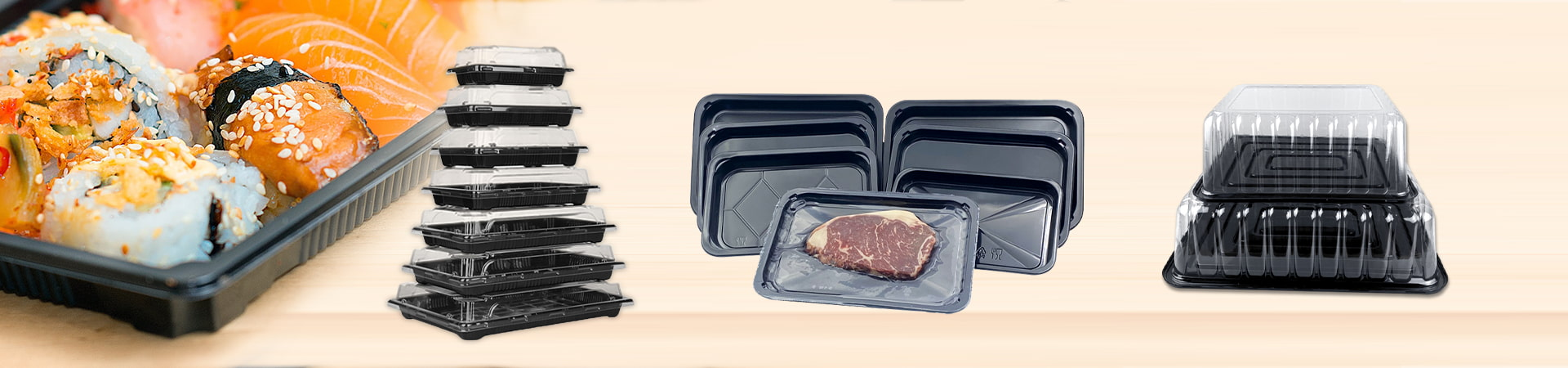
Thermoforming vs Injection Molding: Which Process Fits Your Pack
Buyers often arrive with a material in mind — PET, PP, PVC — and ask which process will shape it. The more useful question runs the other way round: how many units, how deep the draw, and how tight the tolerance? Those three answers point to thermoforming or injection molding long before the resin choice matters. Get the process wrong and you either overpay for tooling or fight a quality problem for the life of the programme.
This guide is written for packaging buyers comparing a shallow tray, insert or lid with a quoted tool. It is not a materials lecture. It gives the cost crossover, the sampling reality and a rule you can apply to a real RFQ today. If your pack is a shallow-to-medium draw in the tens of thousands, the thermoformed packaging route will usually win on both time and total cost.

How Each Process Makes the Part
Thermoforming heats a plastic sheet, draws it over or into a single-sided mould with vacuum (and often pressure), then trims the cooled web. Injection molding injects molten resin into a closed two-sided metal tool, cools it and ejects a finished part. The difference sounds mechanical, but it drives everything a buyer cares about.
A thermoform tool is effectively one surface plus a trim; an injection tool is a matched pair of hardened halves with runners, gates and cooling channels. That is why the first tool costs a fraction of the second and can be cut in days rather than weeks. It is also why injection holds tighter wall tolerances and repeats a complex 3D geometry more faithfully once the tool is paid for.
| Factor | Thermoforming | Injection molding |
|---|---|---|
| Tool cost | Low — single-surface aluminium or composite tool | High — matched hardened steel tool |
| Sampling speed | Fast; revisions are quick and inexpensive | Slow; steel changes cost time and money |
| Practical volume | Low to high, but best in short-to-medium runs | Medium to very high; tool cost needs amortising |
| Wall consistency | Good, with thin corners on deep draws | Excellent and repeatable |
| Design detail | Great for trays, inserts, lids and shallow ribs | Better for tight tolerances, threads and snap features |
The Cost Crossover Nobody Puts in the Quote
A supplier quote shows you a unit price and a tooling line. It rarely shows you the crossover point — the volume at which the expensive tool becomes cheaper per part. That point is the number that should drive the decision, and it moves with geometry.
For a shallow tray with modest detail, thermoforming usually stays economical well into the high tens of thousands because the sheet cost dominates and the tool cost stays low. For a geometrically complex part with snap fits or threads, injection can overtake sooner, because a thermoformed version may need secondary trimming or assembly to achieve the same function. Ask for a two-column quote at your real annual volume, not at a nominal 10,000 units.

One more cost line is routinely missed: change cost. If your designs evolve across SKUs, a thermoformed tray can be revised by modifying one tool surface, while an injection tool may need a new steel insert. For a brand still iterating on pack size, that flexibility is worth more than a few cents per unit.
Depth, Draft and Detail: The Three Geometry Tests
Run your design through three quick tests before requesting quotes.
Draw depth. Shallow-to-medium depths suit thermoforming. Very deep draws thin the sheet at the corners and can make a thermoformed part feel flimsy.
Draft angle. Both processes need draft for release, but a thermoformed part is more forgiving of generous draft. A near-vertical wall with texture pushes you toward injection.
Functional detail. Snap features, screw threads and precise locating posts are injection territory. A tray, a divider and a display base are thermoforming territory.
If your part passes all three as a shallow, open, ribbed form, there is usually no engineering reason to pay for a matched steel tool. The advantages of thermoforming trays in that case are structural: faster samples, cheaper changes and a lower entry cost per SKU.
Timeline Pressure Changes the Answer
A tooling decision made under a launch deadline carries a hidden term: how fast can the design be proved? Thermoforming samples in days, so a fit problem is found and fixed inside one cycle. Injection samples in weeks, so the same problem can move a launch date. When the schedule is tight, the process with the shorter feedback loop wins even if its unit price is marginally higher.
This is exactly why a supplier with both capabilities will often recommend thermoforming for a first production run and injection only for a stable, high-volume SKU. It is not a sales preference; it is a risk calculation.
A Five-Question Test for Your RFQ
- What is the annual volume, and the realistic best case? Ask for the crossover price at both numbers.
- How deep is the deepest draw, and what is the wall thickness at the corner? This exposes thinning risk early.
- Does the part need snap fits, threads or a sealing flange? Any yes moves you toward injection.
- How many design iterations do you expect before freeze? More iterations favour the cheaper, faster tool.
- What is the sample date you actually need? Work backwards from that date to see which process can hit it.

Total Cost of Ownership: The Number That Decides It
Unit price and tooling price are both visible on a quote. The number that actually decides the process is total cost across the life of the programme, and it includes items that rarely appear on a supplier sheet. Scrap rate during start-up, secondary trimming, assembly labour, warehousing of flat versus nested parts, and the cost of a design change all land in that total. A tray that saves four cents per unit but needs an extra operator to assemble it is not the cheaper tray.
Work the calculation in three steps. First, add tooling to the first-year volume and get a true cost per part. Second, add any secondary operations the format requires — a carded blister may need sealing labour, a tray may need a lid. Third, price the probability of at least one revision. For a new SKU, that revision is close to certain. Thermoforming usually absorbs it with a modest tool change; injection absorbs it with a new insert and a new validation cycle.
Freight belongs in the same calculation. Flat thermoformed parts nest efficiently, so a carton holds more units and landed cost falls. A rigid injection part with less nesting can erase a small unit-price advantage before it reaches your warehouse. Ask both suppliers for units per carton and carton cube, not just the ex-works price.
Frequently Asked Questions
Is thermoforming always cheaper? No. At very high volumes with tight tolerances, injection molding wins on unit cost. Thermoforming wins on tool cost and speed, which is decisive for short runs and changing designs.
Can thermoformed parts be food-grade? Yes. Food-contact sheet materials are widely used for trays and inserts; ask for the material declaration and migration documentation for your target market.
How fast can a thermoformed sample be ready? Often within days once the drawing is final, because the tool is simple to cut and revise. Confirm the actual sampling slot with your supplier.
Which process is better for recyclable packaging? Both can use recyclable mono-materials. The bigger factor is whether the whole pack — tray, lid and label — stays in one material family.
Can I switch process later? Yes, but the geometry usually needs rework. Decide before the tool is cut, not after the first production order.
Not sure which process fits your volume?
Talk to Jiasheng About Your Pack