
Your Cart
Recyclable Sushi Containers: How to Choose the Right Material for the Market You Sell In
The most expensive mistake in sushi packaging is assuming "recyclable" is a property of the material. It is not. It is a property of the market — of what the sorting facilities where your sushi is actually sold can identify, collect and reprocess. The same tray can be a genuinely recycled product in one country and a guaranteed landfill item in another.
That is why the right answer to "which material should our sushi packaging be?" is never a single word like PET or PS. It depends on where each SKU ships, who collects the tray after use, and what your retail customers' own policies demand — which are often stricter than the law. This article gives you a market-by-market picture as of 2026, three cross-market truths that surprise most buyers, and a decision process you can run per SKU.
The Market Decides — Not the Datasheet
Start by clearing up the most common confusion: almost every "polystyrene ban" in the world covers foam only. Rigid PS food trays remain legal in most major markets, including the EU, the US and Japan. So the question is not usually "is it banned?" — it is "does a tray-level collection and sorting route actually exist here, and do retailers in this market still accept PS?"
The honest picture as of 2026:
| Market | Rigid PS today | Where buyers are heading | What drives the decision |
|---|---|---|---|
| Japan | Established — collected and recycled at scale | PS and PET both viable | Supermarket tray collection makes PS a genuinely recycled material |
| EU | Legal, but sorting acceptance weakens | Strong shift to PET/rPET | PPWR recyclability design grades from 2030; retailer policies |
| UK | Legal | PET/rPET preferred | EPR fees modulated by recyclability; packaging tax |
| United States | Legal in most states | Market-dependent | State foam bans, California SB 54, retailer targets |
| Canada | Clear PS not federally prohibited | PET/rPET avoids known issues | Carbon-black foodservice ware restricted; provincial fees |
| Australia & NZ | Legal in Australia; NZ bans PS takeaway packaging (2022) | PET/rPET the practical route | NZ ban; recycling labels and retailer targets |
| Gulf, SE Asia, LatAm | Generally legal | Retailer-led | Tray recycling limited — cost, presentation and retail specs decide |
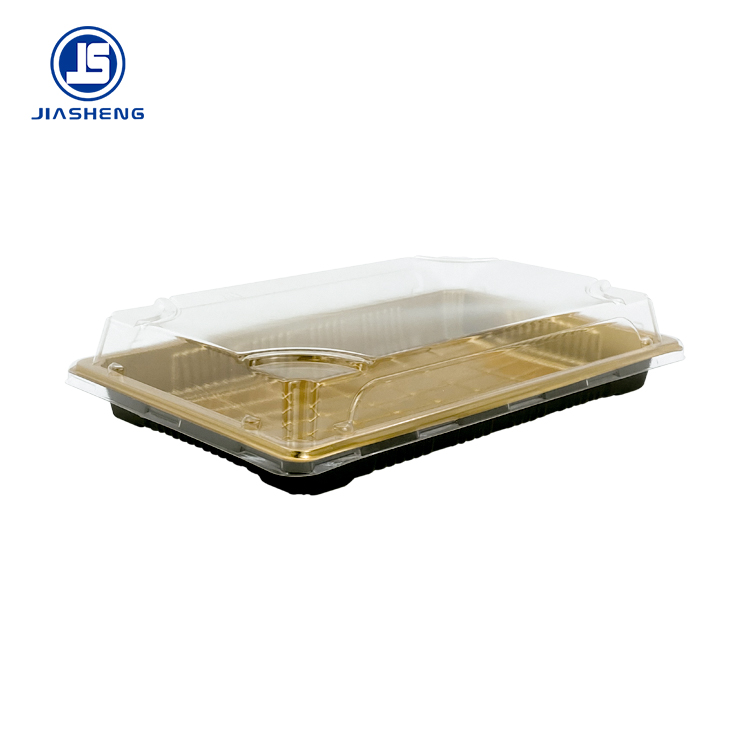
Japan is the instructive exception. Japanese supermarkets have collected used PS trays for decades and recycle them at scale — so in Japan, a printed PS base with a clear lid is a recycled product, not a problem. Formats like our sushi container with lid are built to serve both logics: the same base-and-lid system, quoted in whichever material the destination market actually sorts.
Three Cross-Market Truths That Surprise Buyers
1. Tray recycling is not bottle recycling. PET bottles are recycled almost everywhere; PET trays are recycled in far fewer places than most buyers assume. Trays have different sorting economics — flatter, often colored, often carrying food residue — and in many markets they fall out of the stream even when the resin itself is welcome. Switching to rPET in a market with no tray sorting buys you a good story, not a recycled product. Our deeper guide to choosing between PET, rPET and recyclable blister packaging covers how to read a material claim against a real recycling stream.
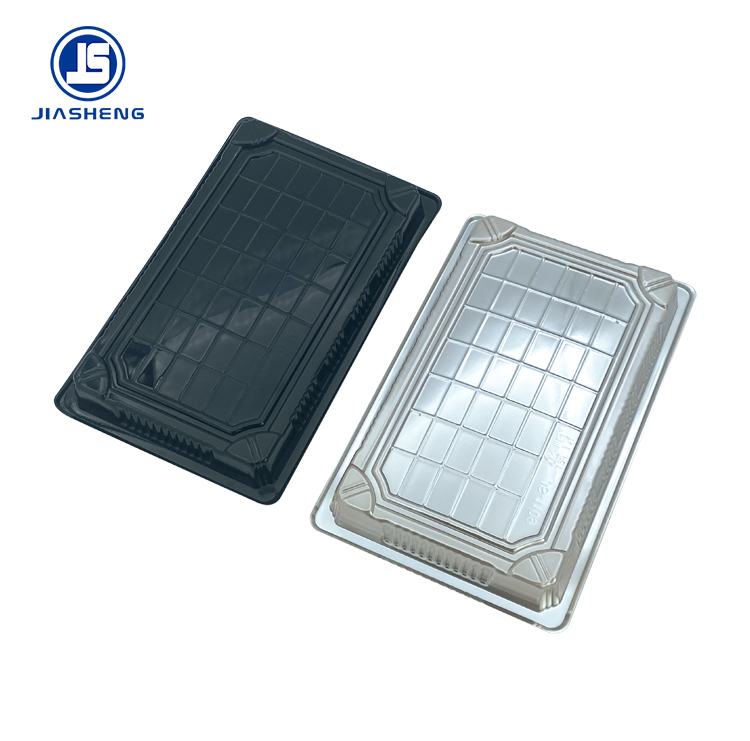
2. Color can disqualify a tray before its resin does. Sorting facilities identify plastics with near-infrared scanners — and carbon black absorbs infrared. A black tray is effectively invisible to the sorter, which is why Canada restricts black foodservice ware and why dark containers earn poor recyclability ratings in other markets too. Where sorting matters, lighter or natural colors survive; black should be a deliberate, market-aware choice, as the two bases below would be.
3. Paperwork now travels with the tray. Across markets, buyers increasingly ask for the same three documents regardless of material: proof of recycled content (with verification), a recycling or market-fit assessment for the destination country, and food-contact certification. If your supplier can only offer the first one, you will be re-doing this exercise at the next retailer audit.
How to Decide, SKU by SKU
Step 1: Map SKUs to markets. One SKU sold in five markets is five packaging decisions. List them honestly; the "global material" conversation usually breaks at this step.
Step 2: Ask which tray-level stream exists. Not "is PET recyclable?" but "are trays collected, sorted and reprocessed here, by whom?" If the answer is only bottles, weight cost and retail specs more heavily.
Step 3: Check retailer policy before legislation. Supermarket packaging policies in the EU, UK and Australia are already ahead of the 2030 rules. The retail customer, not the regulator, sets your real deadline.
Step 4: One system, quoted per market. The practical answer most suppliers converge on: keep the tray geometry constant, vary the material. Wholesale programs such as our disposable sushi container wholesale line exist precisely so buyers can order the same footprint in the material each market needs — without paying for a new mold per country. Where colored bases fit a brand or a market, options from a disposable plastic sushi container range in different colors solve both.

Before committing, put the actual pair in your hands: free sample services let you test the chosen material with real product and real cold-chain conditions before the paperwork and the volume order follow.
Four Questions to Ask Your Supplier
1. Can you quote the same tray in both PS and rPET? A supplier who runs both materials can follow your markets as they shift, instead of forcing a premature global switch.
2. What is the rPET content, and who verified it? Ask for the percentage and the verification, not a marketing number.
3. Which colors sort reliably in my destination market? If you want black, ask what it costs you in recyclability ratings — and whether a lighter alternative exists.
4. Will the food-contact documents name the exact grade? Certificates that say "food grade" without the grade are worth little at an audit.
Frequently Asked Questions
Is PS sushi packaging banned in Europe? No — as of 2026, bans apply to foam, not rigid trays. The pressure in Europe comes from recyclability design requirements taking effect toward 2030 and from retailer policies, which is why PET/rPET is winning there anyway.
Should we just switch everything to rPET now? Not automatically. In markets with real tray collection (Japan, and increasingly Korea, Taiwan, Australia and Canada) it is a strong choice. In markets without tray sorting, rPET costs more and recycles no better than PS. Decide per market, as above.
Does recycled content have to be food-contact approved? Food-contact rPET comes from controlled streams and carries its own certification; it costs more than non-food-contact rPET. Ask which one a quote refers to — the price gap is significant.
Can we keep one global SKU to simplify logistics? You can, and many brands do — usually by adopting PET/rPET globally to satisfy the strictest markets, and accepting a cost premium in the tolerant ones. Whether that premium is worth the simplification is a commercial call, not a technical one.
How do we verify a supplier's recyclability claims? Ask for the destination-market assessment in writing, the verification body for recycled content, and the exact food-contact grade. A supplier serving regulated markets already holds these; one who hesitates is telling you something.
The Bottom Line
Recyclable sushi containers are decided market by market, not by material loyalty. Map your SKUs to destinations, ask where trays — not bottles — actually get sorted, watch your colors as closely as your resins, and keep the tray geometry constant while the material follows the market. Do that, and "recyclable" becomes a claim you can defend at the next audit instead of a word on the datasheet.
Selling Sushi Into Multiple Markets?
Tell us your destinations and current tray dimensions — we will quote the same system in the material each market needs.
Get a Market-Matched Quote