
Your Cart
Clamshell Packaging for Fresh Produce & Retail: A Buyer's Guide
A produce clamshell has one job that a retail shopper never sees: it has to get delicate fruit or leaves from a field, through a cold chain, onto a shelf and into a basket without being opened. That is a mechanical problem disguised as a transparent box. The vent pattern, the hinge and the lock decide whether the pack protects the product or quietly bruises it.
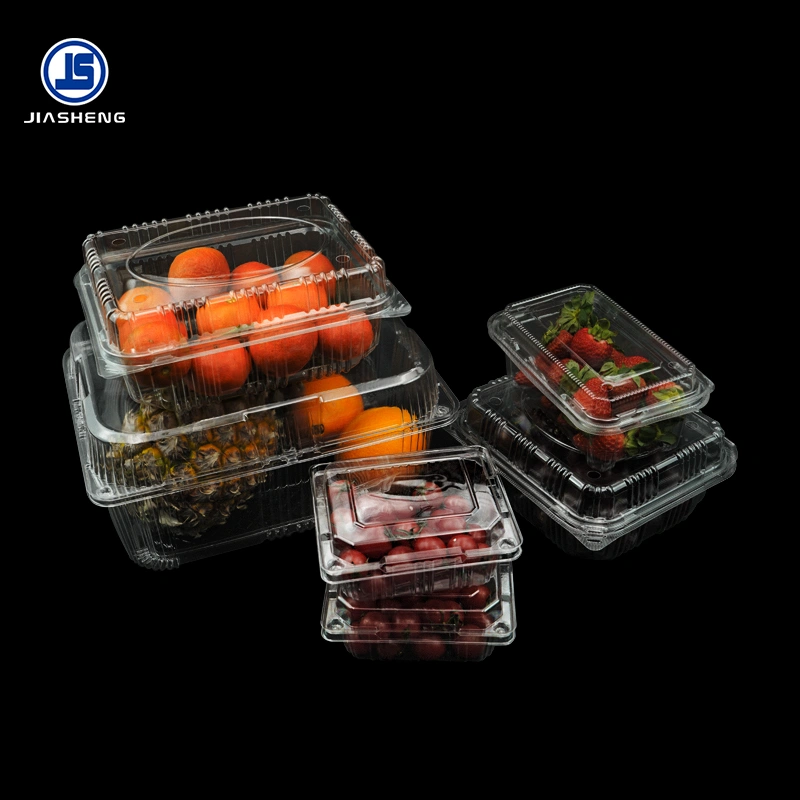
This guide is for growers, packers and retail buyers choosing between a lettuce clamshell, a berry clamshell container and a general transparent fruit box. It focuses on the four variables that fail in the field — ventilation, visibility, hinge and stack strength — and gives a short checklist for specifying each one.

Ventilation Is a Balance, Not a Feature
Vents are there to remove field heat and let moisture escape. Too few, and warm fruit sweats in the carton and mould moves in. Too many, and the pack dries out, loses weight and lets berries chill-damage unevenly. The right pattern depends on the crop, not on the mould.
Berries need high, even airflow and a surface that does not pool water around the fruit. A vented base plus lid vents is typical.
Leafy greens need enough exchange to cool quickly after harvest, but a larger head cavity so leaves are not crushed against the lid.
Stone fruit and citrus tolerate less venting and care more about stack strength and cushioning at the contact points.
Ask for the vent pattern by opening area and location, not just “vented”. Two clamshells with the same footprint can behave very differently in a cold room.
Clarity Sells, but Only If It Stays Clear
A retail clamshell is a display surface. The shopper judges the fruit through the lid, so haze, scratches and fogging cost sales. PET is the default when clarity and rigidity matter; PP is tougher and better where the pack is handled roughly, but it reads less glass-like on the shelf. The choice is a merchandising decision as much as a technical one.

If the pack moves from a cold truck into a warm store, ask about anti-fog treatment. Condensation on the inside of a lid hides the product and makes a fresh pack look tired within hours. A complete guide to clamshell styles and locks will list the vent and lid options, but the anti-fog decision needs to be made against your actual temperature swing.
The Hinge Is the First Thing to Break
A clamshell is opened and closed many times before it reaches a shopper — during packing, quality checks, transport inspection and restocking. A hinge that cracks on the fifth open turns a reusable-looking pack into a single-use one and leaves sharp edges near the fruit. Ask how many fold cycles the hinge is rated for, and test it at cold-chain temperature.
A living hinge works best in PP; PET hinges are stiffer and more prone to whitening or cracking under repeated folds. If your pack is a hinged clamshell that must survive multiple openings, PP is often the safer engineering choice even when PET looks better on the shelf.
Locks and Stacking: Where Cartons Fail
Produce is transported stacked. A lock that pops under a light load lets the lid lift, and a base that lacks vertical ribs lets the top carton crush the fruit below. Look for a lock that engages positively and a base with corner support that nests without pressing on the product.
| Variable | What to specify | Failure if underspecified |
|---|---|---|
| Vent area and location | By crop: base + lid vents for berries, larger cavity for greens | Sweating, mould, uneven cooling or dehydration |
| Material and clarity | PET for display rigidity; PP for hinge life and toughness | Haze, cracked hinge or a pack that looks tired on shelf |
| Lock design | Positive engagement, tested after repeated opening | Lid lifts in transit; product spills or is exposed |
| Stack strength | Ribbed base with corner support that nests without contact | Bottom layers crushed; bruised fruit and claims |
A Field-to-Shelf Checklist
- Load the real product. Test with the actual size and weight, not a proxy.
- Cool it first. Run a cold-chain cycle before judging condensation and vent performance.
- Open and close ten times. Check the hinge at low temperature.
- Stack to your real pallet height. Hold for 24 hours and inspect the bottom layer.
- Check the sightline. View the packed clamshell under store lighting, not on a bench.
Cold-Chain Reality: Where Clamshells Actually Fail
A clamshell is rarely tested in the conditions that break it. It is packed at ambient temperature on a bench, judged by eye, and then loaded into a refrigerated truck with hundreds of other packs. The failure appears later: a lid that has lifted because the lock flexed at low temperature, a hinge that has whitened after a cold fold, or condensation that has turned a clear display into a fogged surface. Testing at the packing bench misses all three.
Run a trial that mirrors the real route. Fill the clamshell with the actual product at field temperature, pre-cool it, stack it to the height used on the pallet, and hold it for the duration of a typical journey. Then move it into a warmer retail environment and inspect the lid after a few hours. This short sequence exposes vent, lock and anti-fog problems at once, and it costs far less than a rejected shipment at the customer.
Weight loss is the quiet cost in produce packaging. A pack with too much vent area can dehydrate berries enough to lose saleable weight over a multi-day chain, while too little vent cooks the same fruit in its own field heat. Ask your supplier for the vent opening area and verify it against your actual cooling method rather than accepting the word vented on a datasheet.
Frequently Asked Questions
PET or PP for a produce clamshell? PET gives better clarity and rigidity for display; PP gives a tougher, longer-lived hinge. Choose by whether the pack is opened repeatedly and how much the shelf display matters.
How many vents does a berry punnet need? It depends on fruit size, pack volume and the cooling method. Ask for vent opening area and verify it with a real cold-chain trial.
Can clamshells be recycled? Many PET clamshells are recyclable where a stream exists. Keep the tray, lid and label in one material family to avoid contamination.
Why does my clamshell fog up? Warm, moist produce moving into a cooler display causes condensation. Anti-fog treatment and adequate venting both reduce it.
Working With a Supplier on a Custom Format
Most produce packs begin life as an existing mould, and that is usually the right starting point. A stock clamshell proves the format, the vent logic and the shelf presentation without the cost of a tool. The moment your product size, weight or cooling requirement falls outside what stock offers, a custom cavity becomes worth considering. Bring the supplier real fruit, in real condition, at the real fill weight; a drawing alone will not reveal how a leaf or a berry sits in the cavity.
Ask how the tool will be revised after the first sample. A vent pattern is rarely perfect on the first pass, and a supplier who builds revision into the plan will get you to a working pack faster than one who treats the first sample as final. Confirm the sample count included in the quote and the cost of an extra round, so the development budget is predictable.
Need a clamshell built around your crop?
Talk to Jiasheng About Your Pack